
EGPA genetic study found two distinct syndromes linked to antibody status
A genetic study found that eosinophilic granulomatosis with polyangiitis (EGPA), a rare inflammatory disease of unknown cause, comprises two genetically and clinically distinct syndromes separated by antibody status. Published in Nature Communications on 12 November 2019, the study compared DNA variants in 676 people with EGPA and 6809 controls. It also found that an underlying tendency to have high numbers of eosinophils, a type of immune cell, contributes to susceptibility to EGPA.
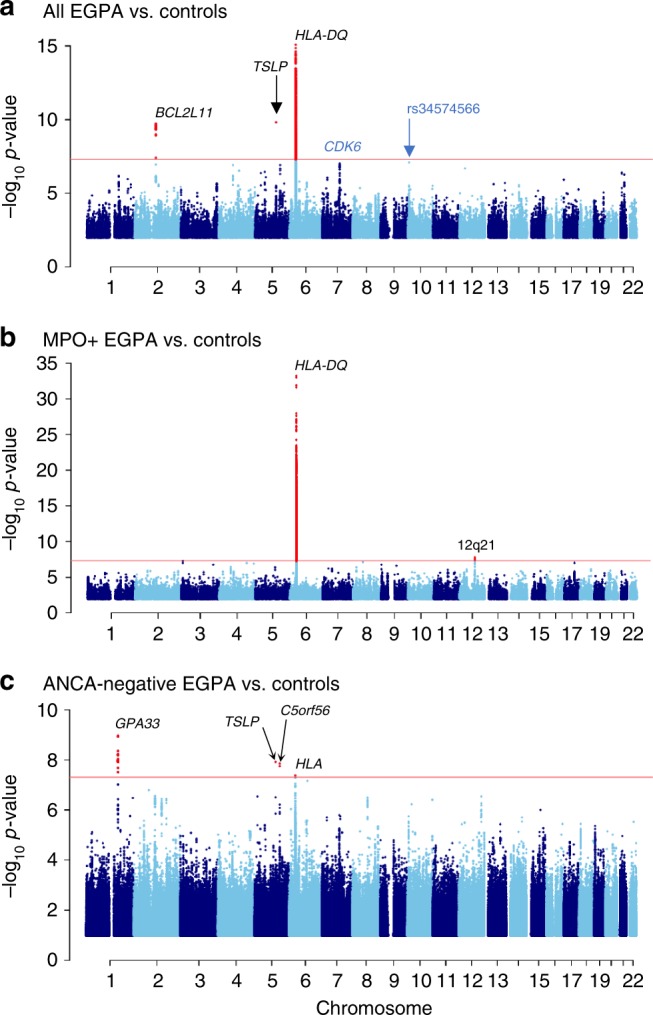
30% of patients have anti-neutrophil cytoplasmic antibodies (ANCA) directed against myeloperoxidase (MPO), a protein. The researchers separated patients according to whether they had these antibodies and found differences in both their genetics and the clinical features of their disease.
EGPA in patients with MPO-directed antibodies was an eosinophilic autoimmune disease, involving eosinophils and an immune response against the body's own tissues. It shared certain clinical features with MPO-positive ANCA-associated vasculitis, a condition involving inflammation of blood vessels. Both also had an association with HLA-DQ, a region involved in immune recognition. For ANCA-negative EGPA, the authors suggested a different possible origin: problems with mucosal surfaces or protective tissue barriers.
The study searched across the genome for DNA variants associated with EGPA. A conventional comparison of cases and controls identified 4 associated regions. A second statistical method, called a conditional false discovery rate approach, identified 4 additional associations. Many variants were also associated with asthma, and six were associated with eosinophil count in the general population.
The researchers then used Mendelian randomisation, which uses genetic variation to examine whether a trait contributes to disease susceptibility. This analysis showed that a primary tendency towards eosinophilia, meaning an elevated eosinophil count, contributes to EGPA susceptibility.
Four candidate genes were targets of therapies in development. The authors said this supported exploring those therapies in EGPA.