
Pseudomonas Genome Database upgraded to compare thousands of genomes
The Pseudomonas Genome Database was upgraded to help researchers compare potentially thousands of complete and draft bacterial genomes, according to a paper published in Nucleic Acids Res. on 17 November 2015. The changes brought reviewed gene descriptions and information about individual bacterial samples together with expanded comparison and visualization tools. Winsor and colleagues described improved computer analyses to help identify potential drug targets and vaccine candidates and support studies of bacterial evolution.
The resource was already known for community contributions to the genome annotation of Pseudomonas aeruginosa PAO1. Annotation adds descriptions of genes and their possible functions to a DNA sequence. The database also allowed researchers to compare that strain's whole genome with those of other Pseudomonas strains.
Manually reviewed gene descriptions remained central to the updated platform. Improved computer analyses supplemented that work, helping researchers identify potential drug targets and vaccine candidates. For evolutionary studies, the analyses helped identify corresponding genes in different organisms, known as orthologs, as well as genes associated with pathogens and distinct regions of DNA called genomic islands.
The upgrade integrated these gene descriptions with isolate metadata, information about individual bacterial samples. Changes to the database's underlying structure made room for those details. The authors said this would allow more powerful comparisons of genomes across datasets in the future. The expanded tools were intended to support analysis of potentially thousands of complete genomes and draft assemblies, in which the DNA sequence had not yet been assembled into a complete genome.
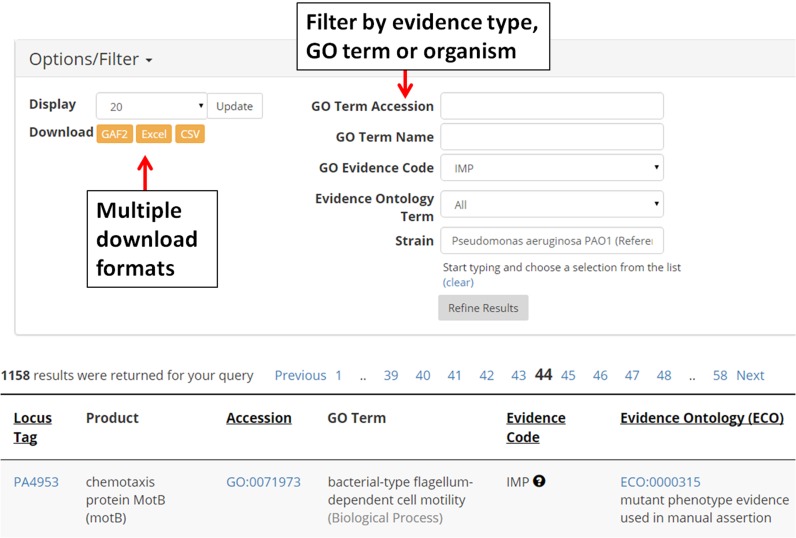
Regular reviews of scientific literature and contributions from the research community continued to support updates to gene descriptions. A major new Pseudomonas community initiative focused on assigning gene ontology terms, standardized descriptions of gene functions. As the database expanded from thousands of genomes, the authors planned further tools for displaying and analysing comparisons across whole genomes. These included more ways to examine the combined set of genes across strains, known as the pan-genome, and to study bacterial populations.