
Cordyceps militaris genome suggested insect infection evolved independently
The genome of Cordyceps militaris suggested that species in the Cordyceps and Metarhizium fungal groups evolved independently to infect insects. Published in Genome Biol. on 23 November 2011, the study found that their similar genetic features reflected separate evolutionary paths. Zheng and colleagues also found that C. militaris lacked genes for known human mycotoxins, toxic substances made by fungi. Sexual reproduction required different mating types, but the fungus could form fruiting structures without an opposite mating-type partner.
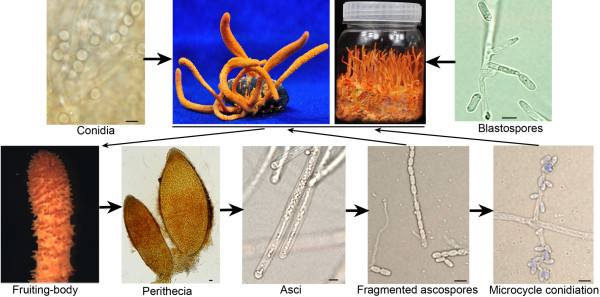
The comparison of genomes suggested convergent evolution, in which separate lineages develop similar characteristics. The fungi had similarly large collections of proteins released outside their cells, as well as expansions of particular gene families. The authors attributed these similarities to convergence, rather than a shared origin of the ability to infect insects. Metarhizium species have been widely used to control insects.
C. militaris also had fewer members of many protein families than other fungi, including Metarhizium species. The authors interpreted these reductions as evidence suggesting a more restricted ecological range.
The team examined gene activity to investigate how the fungus forms fruiting structures. Fruiting involved activation of Zn2Cys6-type transcription factors, proteins that regulate gene activity, and the MAPK pathway, which passes signals within cells. Another cellular signalling system, the PKA pathway, was not activated. That differed from the pattern in other fungi.
Cordyceps species were highly prized in traditional Chinese medicine, but the genes responsible for making their biologically active components had not been determined. Nor had the genes governing insect infection, sexuality and fruiting. The genome sequence provided information that the authors said would help researchers understand the fungus and make use of its medicinal compounds. They described the absence of genes for known human mycotoxins as consistent with its long record of safe medicinal use.