
Low socioeconomic status linked to greater epigenetic age acceleration in three-country study
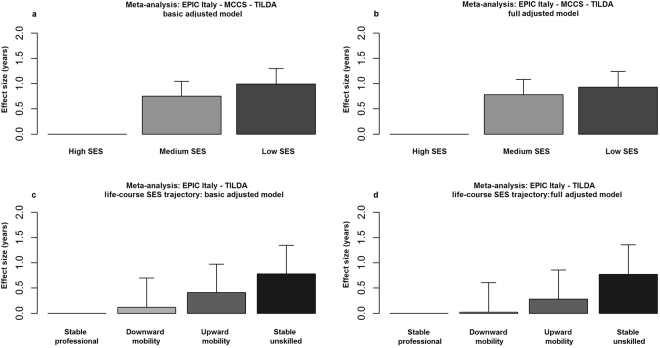
People in the lowest socioeconomic category had greater epigenetic age acceleration than those in the highest, according to a study of more than 5,000 people published in Scientific Reports on 24 November 2017. When the authors compared the extreme categories, low status was associated with 0.99 years more epigenetic age acceleration (95% CI 0.39 to 1.59; p = 0.002). Epigenetic age acceleration is the amount by which a person's age, as estimated from DNA methylation (chemical tags on DNA), exceeds their actual age. It is a gap in estimated age. It does not measure how fast anyone aged over time. The participants came from three independent prospective cohorts in Italy, Australia and Ireland. A prospective cohort is a group of people followed over time.
Fiorito and colleagues, with Vineis as last author, started from a known gap. Low socioeconomic status is associated with earlier onset of age-related chronic conditions and reduced life expectancy, they wrote, but the biological mechanisms behind this remain unclear. Earlier evidence of DNA methylation differences by socioeconomic status had pointed to a possible link with epigenetic age acceleration. The team tested that idea using methylation measured in peripheral blood, the blood that circulates through the body.
The result held across different indicators of socioeconomic status. Lifestyle did not account for all of it. According to the paper, the unhealthy lifestyle habits of people with lower status only partially modulated the associations.
One group fell in between. People whose socioeconomic status improved over the course of their lives had intermediate epigenetic age acceleration compared with those in the two extreme categories. The authors took this as suggesting "reversibility of the effect" and as support for the relative importance of the early childhood social environment. The comparison was observational, though. Nobody was assigned to a change in circumstances, so the pattern does not show that improving a person's status reverses the effect.