
DNA methylation may mediate genetic risk in inflammatory bowel disease, study finds
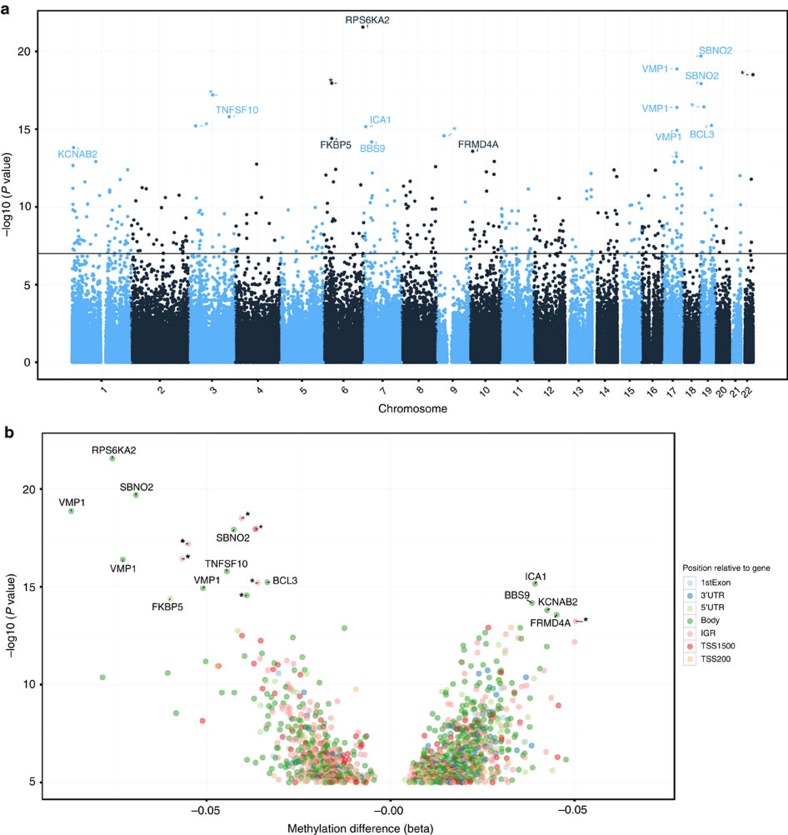
A study of 240 people newly diagnosed with inflammatory bowel disease (IBD) and 190 controls found DNA methylation differences between the two groups at 439 single positions and in 5 longer regions. The work was published in Nature Communications on 25 November 2016. Methylation is a chemical tag on DNA that can help turn genes up or down. Some of the differences tracked inherited genetic variants. The authors, who included the IBD BIOM and IBD CHARACTER consortia, concluded that methylation may mediate genetic risk in IBD.
The team framed the work around gene-environment interaction. Epigenetic changes, they wrote, may give important insight into how that interaction plays out in IBD, a long-term inflammation of the gut. Epigenetic here means changes to the chemical tags on DNA, not to the DNA letters themselves.
Each of the 439 sites was a differentially methylated position, a single spot where the level of tagging differed between patients and controls. The five differentially methylated regions were longer stretches of DNA rather than single spots. The researchers studied them in detail with whole genome bisulphite sequencing, which reads DNA in a way that shows which letters carry methyl tags. They then checked the results in a separate, independent cohort. The top position, at the RPS6KA2 gene, replicated there. So did the regions at VMP1, ITGB2 and TXK.
Because the researchers had genetic and methylation data from the same people, they could map methylation quantitative trait loci. These are places where a person's inherited DNA sequence is associated with how heavily a site is tagged. Methylation at VMP1 and microRNA-21, a small RNA molecule that helps regulate other genes, was associated with two DNA variants. Both are in linkage disequilibrium with a known IBD susceptibility variant, which means they tend to be inherited along with it. That points to one way an inherited risk variant might act in IBD: through the tagging of DNA.
The TXK result was more limited. Patients had hypermethylation, or extra tagging, in the gene's promoter region, the stretch of DNA that acts as its on switch. More methylation there went with lower TXK gene activity in whole blood and in CD8+ T cells, a type of immune white blood cell. The other separated cell types tested showed no such link.