
Nikolai Vavilov, the geneticist who traced where crops began, born 25 November 1887
Nikolai Ivanovich Vavilov was born in Moscow on 25 November 1887, into a merchant family. He went on to identify the centers of origin of cultivated plants, meaning the regions particular crops first came from. He was a Russian and Soviet agronomist who also worked in botany and genetics, and his research focused on improving wheat, maize and other cereal crops. At his institute in Leningrad he created the world's largest collection of plant seeds. By 1933 it held over 148,000 specimens. He became the youngest member of the Academy of Sciences of the Soviet Union.
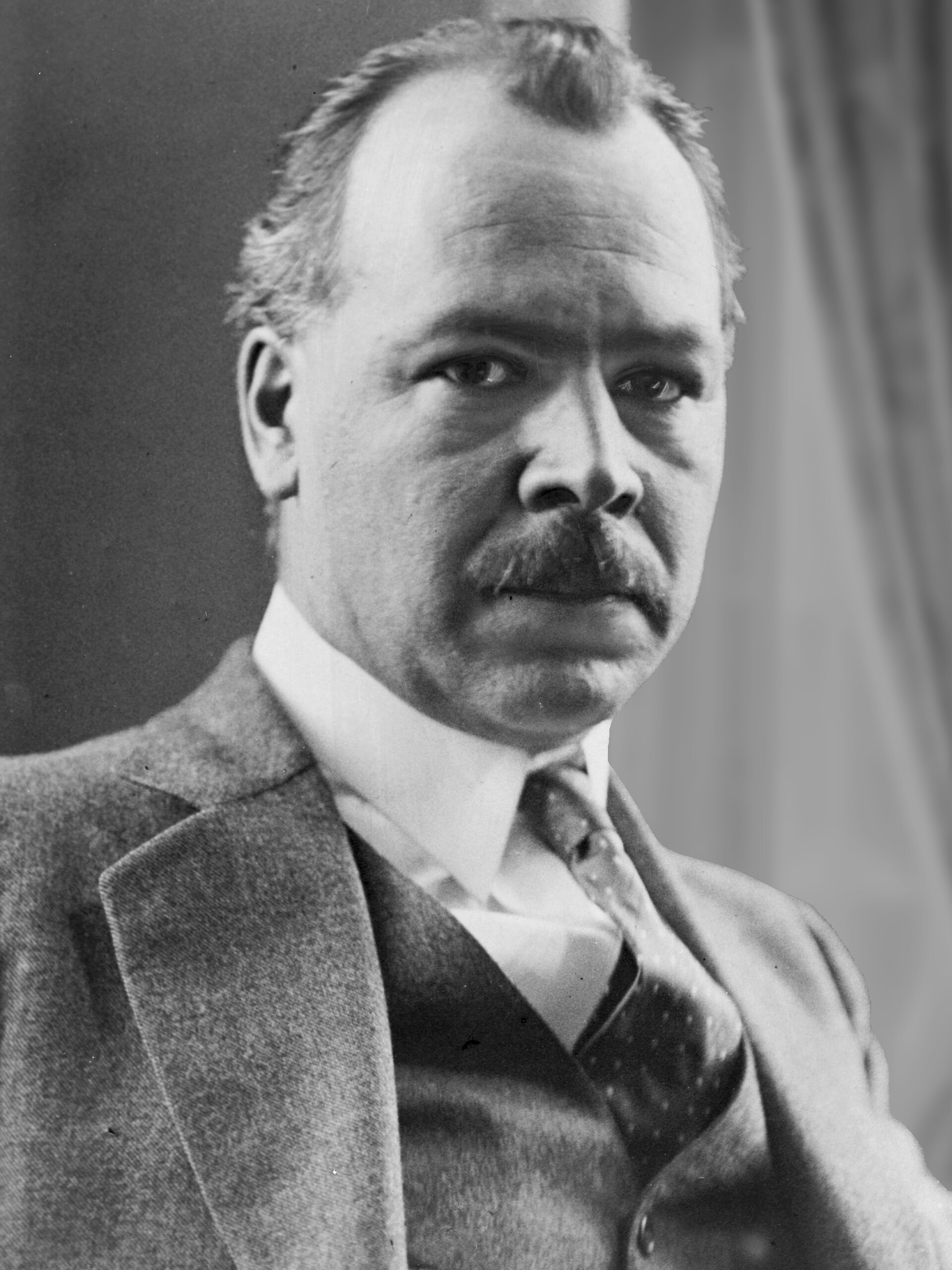
His father had grown up poor, through recurring crop failures and food rationing, and from an early age Vavilov was obsessed with ending famine. He graduated from the Petrovskaya Agricultural Academy in 1910. In 1913 and 1914 he travelled in Europe studying plant immunity, working with the British biologist William Bateson, who helped establish the science of genetics.
He collected seeds on one expedition after another. The first, to Iran in 1916, brought back 171 samples of legume crop seeds new to Russia. Those finds suggested to him that many cultivated plants had come from a center of origin in Southwest Asia. He presented his theory of centers of origin to the public at the Fifth International Congress of Genetics in Berlin in 1927. His energy was enormous. He documented 3,000 types of Triticum vulgare wheat and called every one "perfectly recognizable morphologically", meaning each could be told apart by its physical form.
Trofim Lysenko brought him down. Lysenko dismissed genetics as nonsense invented by the monk Gregor Mendel and pushed his own ideas about inheritance and evolution. He also had the ear of Joseph Stalin. In 1936 he arranged for Vavilov to be sacked as head of the institute. Four years later, in August 1940, the NKVD, the Soviet secret police, arrested Vavilov while he was collecting seeds in Ukraine. He was sentenced to death in July 1941. The sentence was commuted to twenty years' imprisonment, but he died in prison on 26 January 1943. In 1955, under Nikita Khrushchev, the death sentence was retroactively pardoned.