
OMIM.org paper described an online catalog linking human genes to disorders
A paper published in Nucleic Acids Research on 26 November 2014 described OMIM.org, the official website of Online Mendelian Inheritance in Man, which had launched in January 2011. The authors, J.S. Amberger, A. Hamosh and three colleagues, called OMIM "a comprehensive, authoritative and timely research resource" of curated descriptions of human genes and phenotypes, and of the relationships between them. A phenotype is an observable trait or disorder. The entries drew on published peer-reviewed biomedical literature. Genes and phenotypes had separate entries, and each received a unique, stable six-digit identifier called a MIM number.
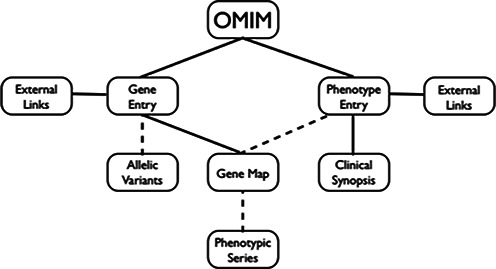
Entries were written in a structured free-text format. According to the authors, this gave the catalog the flexibility to describe complex and nuanced relationships between genes and genetic phenotypes efficiently. OMIM also kept a derivative table of genes and genetic phenotypes known as the Morbid Map. The paper said the resource served overlapping and diverse communities of clinicians, molecular biologists and genome scientists, along with students and teachers of those disciplines.
The new site had better search tools. Users could search by genome coordinates, which are numbered positions along a chromosome. They could also turn on thesaurus-enhanced search term options, which take related wording into account. Some similar phenotypes can arise from changes in different genes, a pattern called genetic heterogeneity. OMIM created phenotypic series to make that heterogeneity easier to view. Clinical synopses, which summarize a condition's features, gained image links and terms from UMLS, the Human Phenotype Ontology and Elements of Morphology. These are vocabularies for describing medical and physical features.
All OMIM data could be downloaded by FTP, a long-standing method of transferring files, or retrieved through an API, which lets other software request records directly. The paper also introduced MIMmatch, which it described as a novel outreach feature meant to disseminate updates and encourage collaboration.