
Blood plasma DNA testing detected mutations in patients with advanced cancers
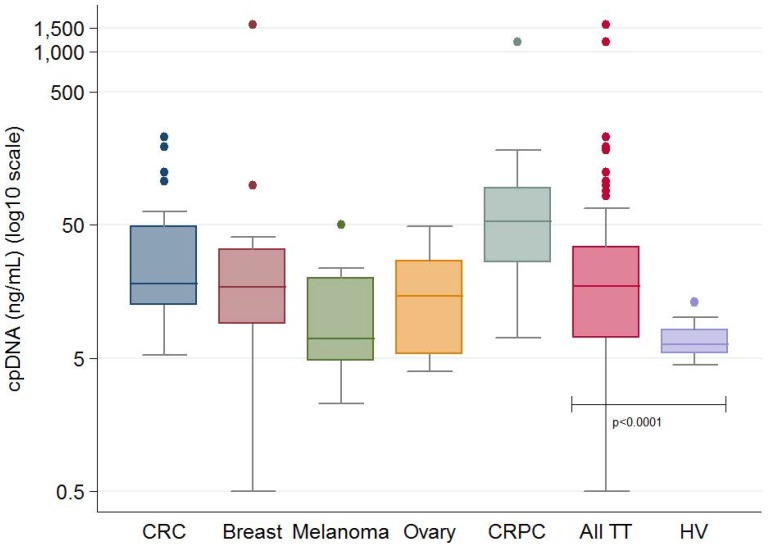
DNA from blood plasma showed high agreement with stored tumor tissue in detecting mutations at key sites in KRAS, BRAF and PIK3CA in patients with advanced cancers. Researchers also found important differences between the samples, which were collected at different times. Published in PLoS One on 7 November 2012, the study tested specimens from 105 patients with solid tumors referred for Phase I trials of molecularly targeted drugs. Median plasma DNA concentration was 17 ng/ml, 3-fold higher than in healthy volunteers. Higher concentrations were associated with worse overall survival. The results suggested that much of the plasma DNA came from tumors.
Choosing drugs that target particular molecular changes requires repeated access to tumor DNA. Tumors change over time as genetic instability and pressure from treatment alter which cancer cells survive. The researchers examined whether DNA circulating in plasma, the liquid portion of blood, could be used to test for tumor mutations. They also investigated whether its concentration was associated with survival.
The team compared samples collected from the same patients at different times. These included stored tissue from primary tumors, tumors at sites where cancer had spread, or both, alongside plasma DNA. Using the Sequenom MassArray System and OncoCarta panel, the researchers tested for multiple somatic mutations, DNA changes acquired rather than inherited.
Plasma DNA concentrations ranged from 0.5 to 1600 ng/ml. Each 10-fold increase was associated with an overall survival hazard ratio of 2.4, indicating a higher rate of death during follow-up. The 95% confidence interval was 1.4 to 4.2. Plasma DNA concentration remained an independent predictor of overall survival when other factors were considered. Albumin and performance status, a measure of how well patients could carry out daily activities, also remained independent predictors.
The comparison found high agreement between plasma and stored tissue in detecting mutations at key sites in KRAS, BRAF and PIK3CA, alongside important differences. The samples had been collected at different times. The researchers concluded that the assay could be used to detect acquired mutations in plasma when a safe repeat tumor biopsy was not feasible and genetic analysis of stored tissue was considered insufficient. That was a proposed use of the test, rather than a reported finding from patients in those circumstances. They called for further studies to pursue the incorporation of circulating nucleic acid testing into standard care.