
PathogenFinder correctly classified 398 of 449 bacteria by disease potential
PathogenFinder correctly classified 398 of 449 completely sequenced bacteria in an independent test of its ability to predict whether they could cause disease in humans. The method achieved 88.6% accuracy; the remaining bacteria were classified incorrectly. Cosentino S, Voldby Larsen M, Møller Aarestrup F, Lund O described the method in PLoS One on 28 October 2013.
Most bacteria are harmless or beneficial to their hosts, but others can cause serious disease and even death. Falling costs of high-throughput sequencing, which reads large amounts of DNA, had made complete genome sequences available from both harmless strains and those that cause disease in humans.
Those sequences gave researchers material to identify families of genes associated with pathogenicity, meaning the ability to cause disease. They could also use the data to develop tools for predicting that ability in newly sequenced strains. Previously, such investigations had relied mainly on more expensive and time-consuming experiments.
PathogenFinder compared groups of proteins assembled without regard to their assigned biological functions or known involvement in disease. Its analysis was therefore not restricted to genes already associated with pathogenicity. The authors said this approach could help researchers discover previously unrecognized pathogenicity factors, features that contribute to a bacterium's ability to cause disease.
The web server accepted a bacterium's proteome, its collection of proteins, or its genome, the complete DNA sequence. Users could also submit raw reads, the DNA sequence fragments produced during sequencing, for a prediction of disease-causing potential.
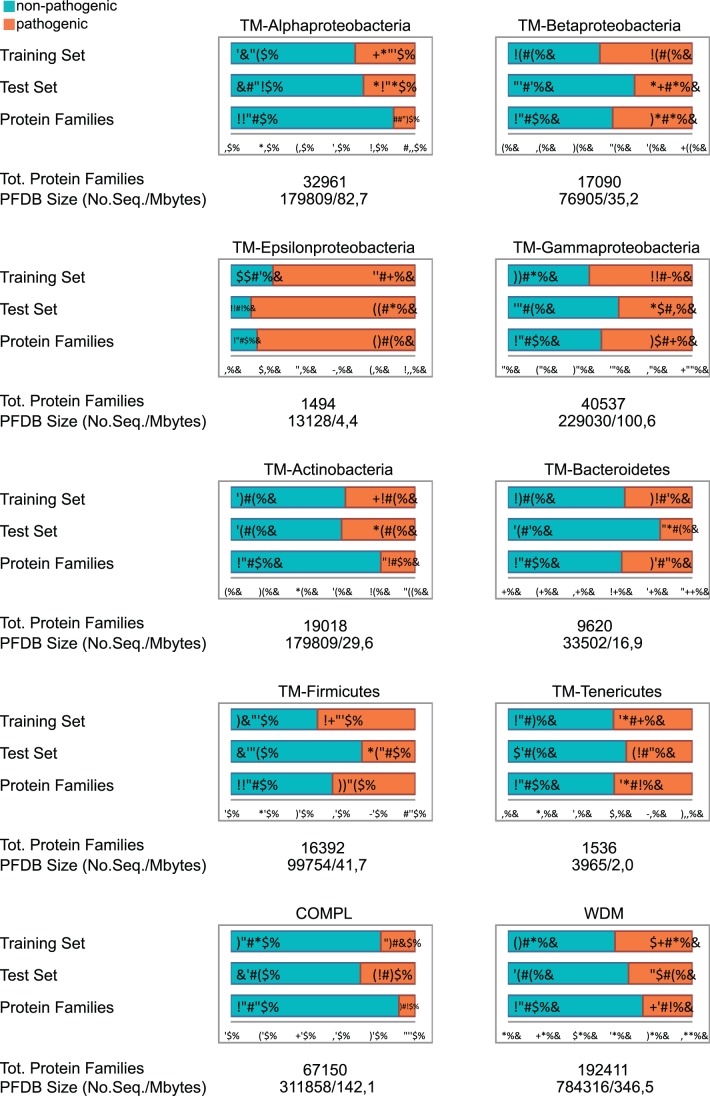
The method was designed to work across all groups used to classify bacteria. To evaluate it, the researchers used the entire training set to develop the method, then assessed its predictions on a separate, independent test set of completely sequenced bacteria. The authors also proposed using the server to identify potentially disease-causing features in known and unknown strains.