
Blood RNA marker distinguished ovarian cancer precursor from benign lesions
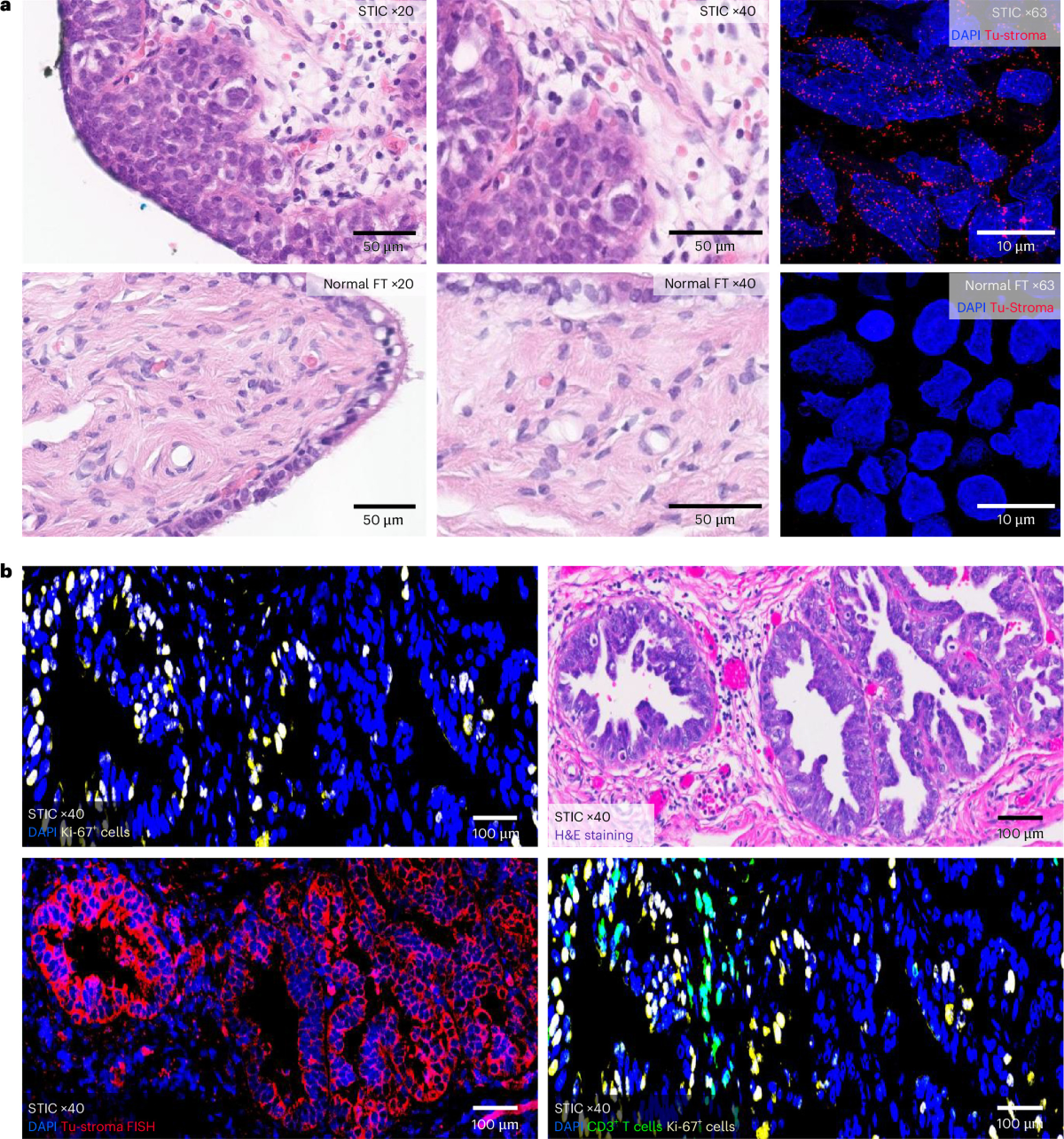
A blood RNA marker called Tu-stroma distinguished a noninvasive ovarian cancer precursor from benign lesions more accurately than cancer antigen 125 (CA125) in a study of 506 people. Researchers writing in Nature Medicine reported an area under the curve of 0.99 for Tu-stroma versus 0.31 for CA125. This measure describes how well a test separates groups. The study included 43 people with the precursor, 232 with high-grade serous carcinoma, 143 whose tissue around the ovaries and fallopian tubes appeared normal under a microscope, and 88 with benign lesions.
The precursor, serous tubal intraepithelial carcinoma (STIC), is a noninvasive lesion in fallopian tube tissue. It is typically identified only by examining surgically removed tissue under a microscope. High-grade serous carcinoma (HGSC), the most prevalent form of epithelial ovarian cancer, arises from STIC. The researchers examined whether Tu-stroma in blood could distinguish these earliest defined phases of disease from benign lesions.
Tu-stroma is a long noncoding RNA, a molecule that does not encode a protein. The team measured it in serum extracellular vesicles, small particles in the liquid portion of blood. The HGSC cases ranged from stages I through IV. Test performance was assessed using area under the curve, or AUC, with higher values indicating better separation between groups.
Against the controls with microscopically normal tissue, Tu-stroma distinguished STIC with an AUC of 0.99, compared with 0.59 for CA125. For HGSC versus benign masses, Tu-stroma reached an AUC of 0.98, compared with 0.84 for CA125. Both differences were statistically significant, with P < 0.001.
Separate comparisons found no systematic elevation of Tu-stroma among 116 people with inflammatory or physiological conditions or 160 with nonovarian cancers. Each group was assessed against 100 healthy controls. The authors said these findings supported the marker's specificity to the disease context.
Whether Tu-stroma can help clinical decisions remains unvalidated. The authors called for prospective studies that enroll people consecutively in real-world settings to establish diagnostic performance, predictive value and clinical utility.
Written by the Genomes desk from the primary source cited and linked above and checked against it. Research use only; not medical advice. Corrections: [email protected].