
Silencing or deleting CDH1 pushes human breast cells toward a progenitor-like state
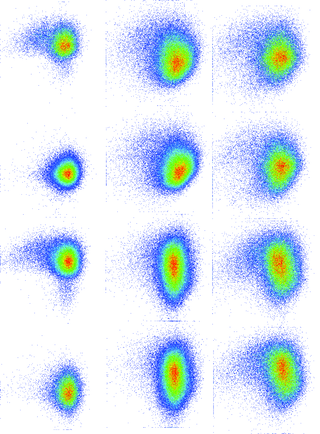
Normal human breast cells shifted toward a luminal progenitor-like identity when their CDH1 gene was silenced or deleted, researchers at the University of Colorado Anschutz and the University of Minnesota report in PLOS Genetics. CDH1 carries the instructions for E-cadherin, a protein that helps neighboring cells stick together. The gene is lost in about 95% of invasive lobular carcinoma (ILC), a breast cancer that accounts for approximately 15 percent of breast cancer diagnoses, and the loss happens early. To model that step, the team worked with finite-lifespan human mammary epithelial cells (HMEC). They cut the gene's expression with siRNA or knocked the gene out with CRISPR/Cas9. These noncancerous cells come from healthy breast reduction surgery and reflect early hyperplasia, an early stage of cell overgrowth.
How E-cadherin was targeted turned out to matter. In four HMEC models, blocking cell-to-cell contacts with antibodies switched on gene signatures of epithelial-mesenchymal transition (EMT). In this process, tightly joined cells take on looser, more mobile traits. That result fits E-cadherin's known suppression during EMT. Targeting CDH1 genetically, the route that mirrors what happens in ILC, had the opposite effect. EMT signatures went down, and gene expression moved toward a luminal state, the type of cell that lines the inside of the breast ducts.
Several techniques pointed the same way: RNA sequencing, single-cell transcriptomics, flow cytometry, microscopy and ATAC-seq, which maps the stretches of DNA that are open for use. The paper reports a matching pattern in transcriptomic data from clinical ILC precursor lesions. In a separate experiment, the researchers sorted luminal cells from basal cells before knocking out CDH1. Both groups changed identity. They converged on a new balance with a luminal progenitor-like phenotype, resembling the immature cells that give rise to luminal cells.
CDH1 loss also let the cells divide more over their limited lifespan. The authors suggest this may contribute to clonal advantage, an edge in outgrowing neighboring cells, when a tumor first forms. The cells were more resistant to anoikis as well. Normal cells undergo this self-destruction when they are detached from their surroundings, and the paper calls resistance to it a defining feature of ILC cells. The authors propose that this remodeling of cell identity may underpin how early CDH1 loss drives ILC.
The study gives ILC researchers a possible explanation for how the cancer begins, and the authors say it may explain distinct aspects of how ILC presents clinically among breast cancers. Most of the experiments used cultured cells that reflect early hyperplasia, not tumors, so the link to tumor initiation remains a proposal. The shift toward a luminal state did also appear in transcriptomic data from clinical ILC precursor lesions.
Written by the Genomes desk from the primary source cited and linked above and checked against it. Research use only; not medical advice. Corrections: [email protected].