
Urine RNA test flags localized bladder cancer at 95% sensitivity
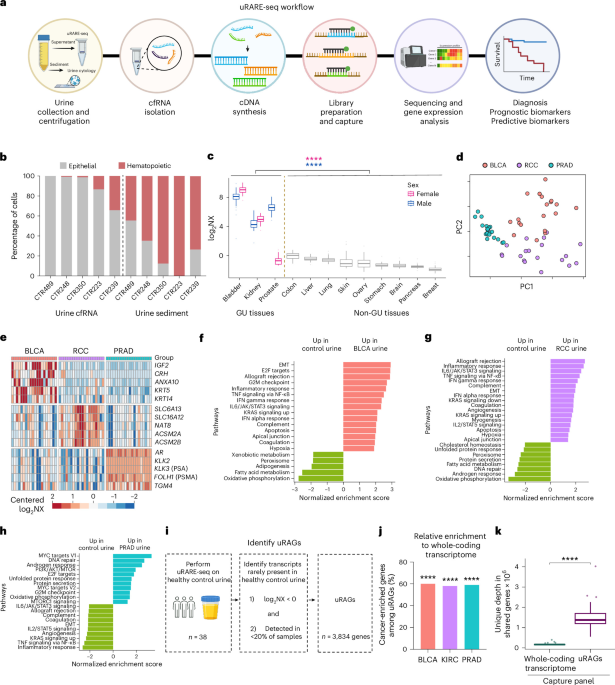
Researchers describe uRARE-seq, a test that reads cell-free RNA in urine, in Nature Medicine. Cell-free RNA is genetic material that cells, including tumor cells, release into body fluids. The team ran the test on 683 urine samples from people with cancer and from controls. For localized bladder cancer, meaning cancer that had not spread beyond the bladder, it reached 95% sensitivity at 90% specificity: it caught 95% of those cancers while 90% of people without bladder cancer correctly tested negative. It outperformed analysis of tumor DNA in urine. It also sensitively detected minimal residual disease, the small traces of cancer that can remain after treatment, and sorted 36 patients treated with surgery and then BCG by how they responded. In 10, the test no longer detected tumor RNA in urine after surgery alone. In 15, tumor RNA was still detectable after surgery but no longer detectable after BCG. In the other 11, it was still detectable after BCG. Patients in the first two groups had a much lower risk of the cancer coming back than those whose tumor RNA was still detectable after treatment. BCG (Bacillus Calmette-Guérin) is a weakened bacterium placed directly into the bladder, an intravesical treatment, to prompt an immune attack on the tumor. Before BCG treatment, urine from patients who went on to respond completely showed T cell and other immune signatures, while patients who did not respond showed higher expression of genes linked to cell division. From pretreatment urine of 114 patients, the authors built a biomarker that predicted response to BCG versus chemotherapy with an area under the curve of 0.93, on a scale where 1 is perfect prediction and 0.5 is no better than chance. The biomarker was also strongly associated with the risk of the cancer coming back.
Urine testing is noninvasive. The authors call this a promising biomarker approach for bladder cancer, but say prospective studies are needed to assess its clinical utility.
Written by the Genomes desk from the primary source cited and linked above and checked against it. Research use only; not medical advice. Corrections: [email protected].