
Atlas of alternative polyadenylation in 379 human brains ties 168 loci to brain traits
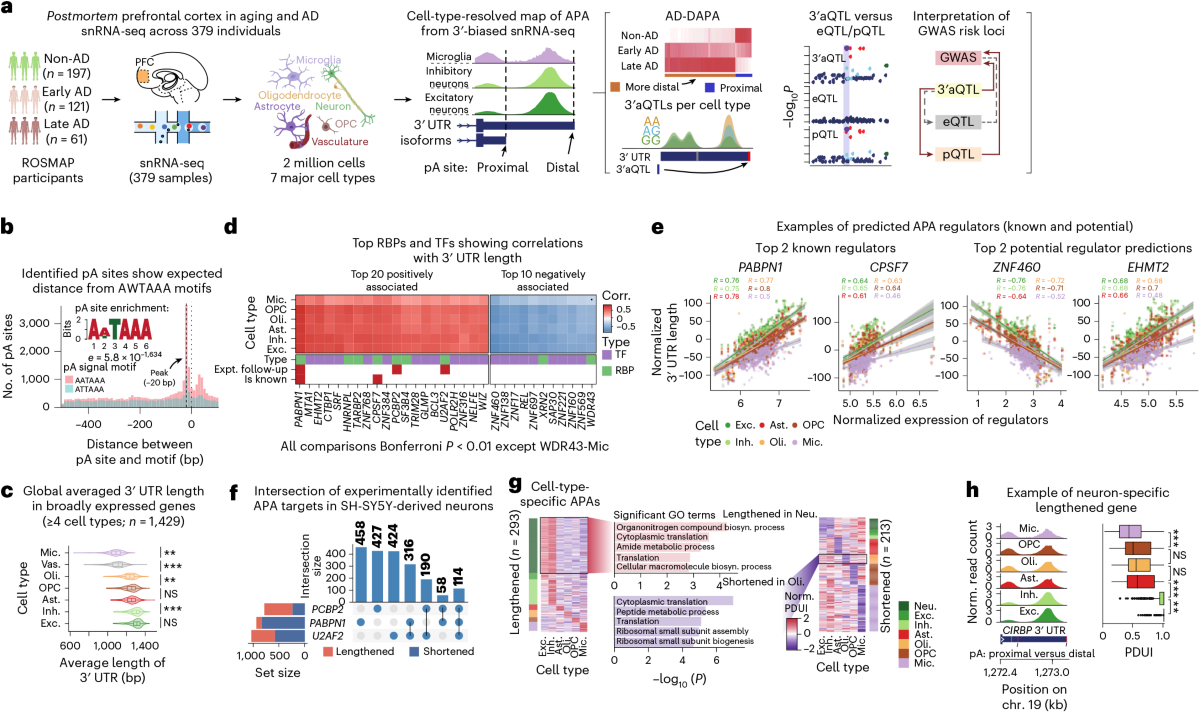
Researchers profiled alternative polyadenylation in 2 million cells from 379 postmortem human brains, from people with and without Alzheimer's disease, and published the atlas in Nature Genetics. Combined with whole-genome sequencing, the data yielded 3′ untranslated region quantitative trait loci for 4,288 genes. Across 17 brain traits and diseases, 168 GWAS loci depended on them. Only 17.5% are shared with eQTLs. PLEKHA1 turned up for Alzheimer's disease and SNCA for Parkinson's disease. For SNCA, the choice of 3′ untranslated region altered where its mRNA sits within the cell, in line with the risk locus acting independently of eQTLs in neurons and oligodendrocytes.
Most of these loci do not show up as eQTLs, so the atlas points to regulatory mechanisms beyond gene expression for variants that contribute to Alzheimer's disease, Parkinson's disease and other brain disorders.
Written by the Genomes desk from the primary source cited and linked above and checked against it. Research use only; not medical advice. Corrections: [email protected].