
Bringing back the American chestnut: four approaches to a forest giant's return
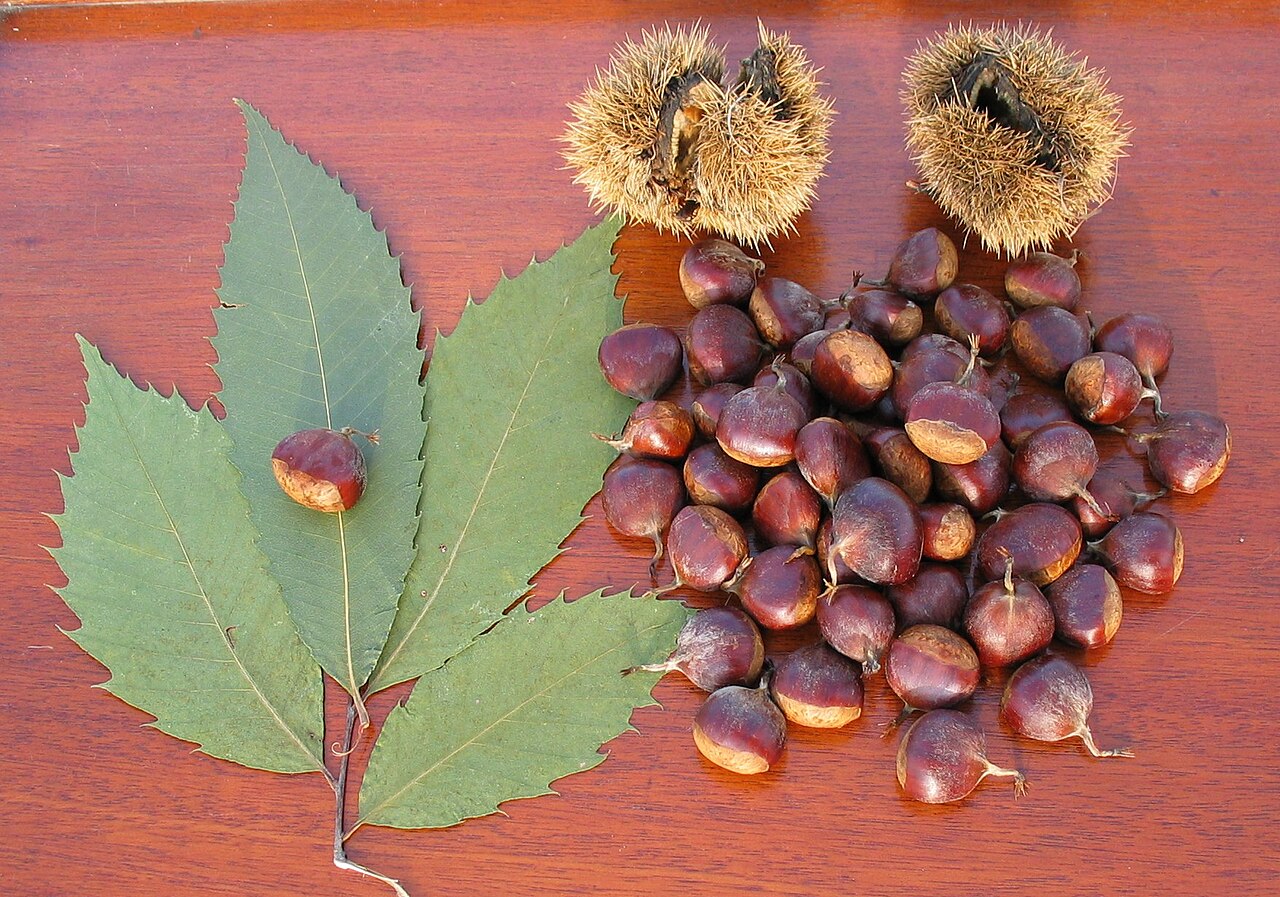
The American chestnut (Castanea dentata) has not vanished. In parts of its former range, living roots still send up shoots. The tragedy is that blight, a fungal disease, can kill those shoots before they become the towering, nut-bearing trees that once fed wildlife and supplied timber across eastern North America. Growing another seedling is only the beginning: it must survive long enough to become a forest tree.
Researchers are tackling that problem in several ways. Some breed trees for resistance, some change how a tree handles the fungus's attack, and others try to weaken the fungus itself. These approaches have different strengths, setbacks and timescales.
Breeding American and Chinese chestnuts
Chinese chestnuts have lived alongside the blight fungus for much longer and often withstand it better. The American Chestnut Foundation (TACF) has crossed them with American chestnuts, then crossed descendants back with American trees. The aim is to keep the American tree's forest-growing characteristics while retaining resistance from its Chinese relatives.
Resistance has proved more complicated than transferring one helpful gene. TACF now uses genomic selection: DNA patterns, checked against trees' measured performance, help breeders choose which young trees to cross next. That can shorten the wait before making breeding decisions, although the offspring still need testing.
For a forest, the distinction matters. A tree that tolerates blight in a trial must also grow tall, cope with local conditions and compete with its neighbours. TACF's current breeding strategy treats those as connected problems, with progress expected over decades.
Breeding from American survivors
The American Chestnut Cooperators' Foundation (ACCF) takes another route: crossing American chestnuts with other American chestnuts, without adding Chinese chestnut ancestry.
Its breeding programme starts with trees that have survived blight. Researchers cross selected trees, expose their offspring to the fungus and look for better resistance. Surviving a disease once does not guarantee that a tree's seedlings will withstand it, which is why testing successive generations matters.
This approach keeps the breeding material entirely American chestnut. Its challenge is to bring together enough useful resistance from within that species to produce trees that can survive in forests. It is a different breeding bet, rather than evidence that the restoration problem has already been solved.
Helping the tree withstand the fungus's acid
At SUNY College of Environmental Science and Forestry (SUNY-ESF), researchers have added a wheat gene that enables chestnuts to make oxalate oxidase, or OxO. This enzyme breaks down oxalic acid, one of the substances the blight fungus uses to damage bark. The idea is to reduce that damage so the tree can tolerate infection.
One line, Darling 54, received a USDA APHIS decision in August 2026: the agency found it unlikely to pose a greater plant-pest risk than comparable chestnuts and removed it from those regulations. That finding does not establish that it can restore a forest. SUNY-ESF also noted in its spring report that public distribution depended on a separate EPA review.
The programme has had setbacks. Material previously called Darling 58 turned out to be Darling 54 after a labelling error. TACF withdrew its support in 2023 following concerns about performance.
SUNY-ESF's spring 2026 report notes slower average growth in Darling 54, with differences by planting site. Its next line, DarWin, increases OxO production in response to wounds or infection. Early comparisons involved only a few trees; more tests and a separate regulatory review are needed.
Giving the fungus a virus
A fourth approach targets the attacker. Certain viruses infect the blight fungus and reduce its damage. Treating a tree's infected bark with virus-carrying fungus can help that tree survive.
Treating an entire tree and distributing the virus across a forest is harder. Different fungal strains do not always exchange it. University of Maryland researchers engineered fungal strains to overcome some of those barriers, creating what they called super donors.
Even so, TACF says limited natural spread remains a barrier to using this method for large-scale restoration. For now, keeping particular trees alive for breeding is valuable. Protecting one tree through repeated treatment and protecting a whole forest are very different tasks.
What would a return look like?
Promising seedlings do not yet amount to a recovered forest. The long-term test is whether trees can survive blight, reach the canopy, produce nuts and leave another generation behind across many sites.
The different programmes give researchers more than one route to try. Their results also clarify the scale of the work: bringing back the American chestnut means rebuilding a lasting place for it in the forest.
Photo: American chestnut nuts, burs and leaves, photographed by Timothy Van Vliet in his New Jersey orchard in 2004. CC BY-SA 3.0; resized copy.
Written by the Genomes desk from the primary sources cited and linked above and checked against them. Research use only; not medical advice. Corrections: [email protected].