
Lipid nanoparticle built for large mRNA reaches 79% Cas9 knockout in liver
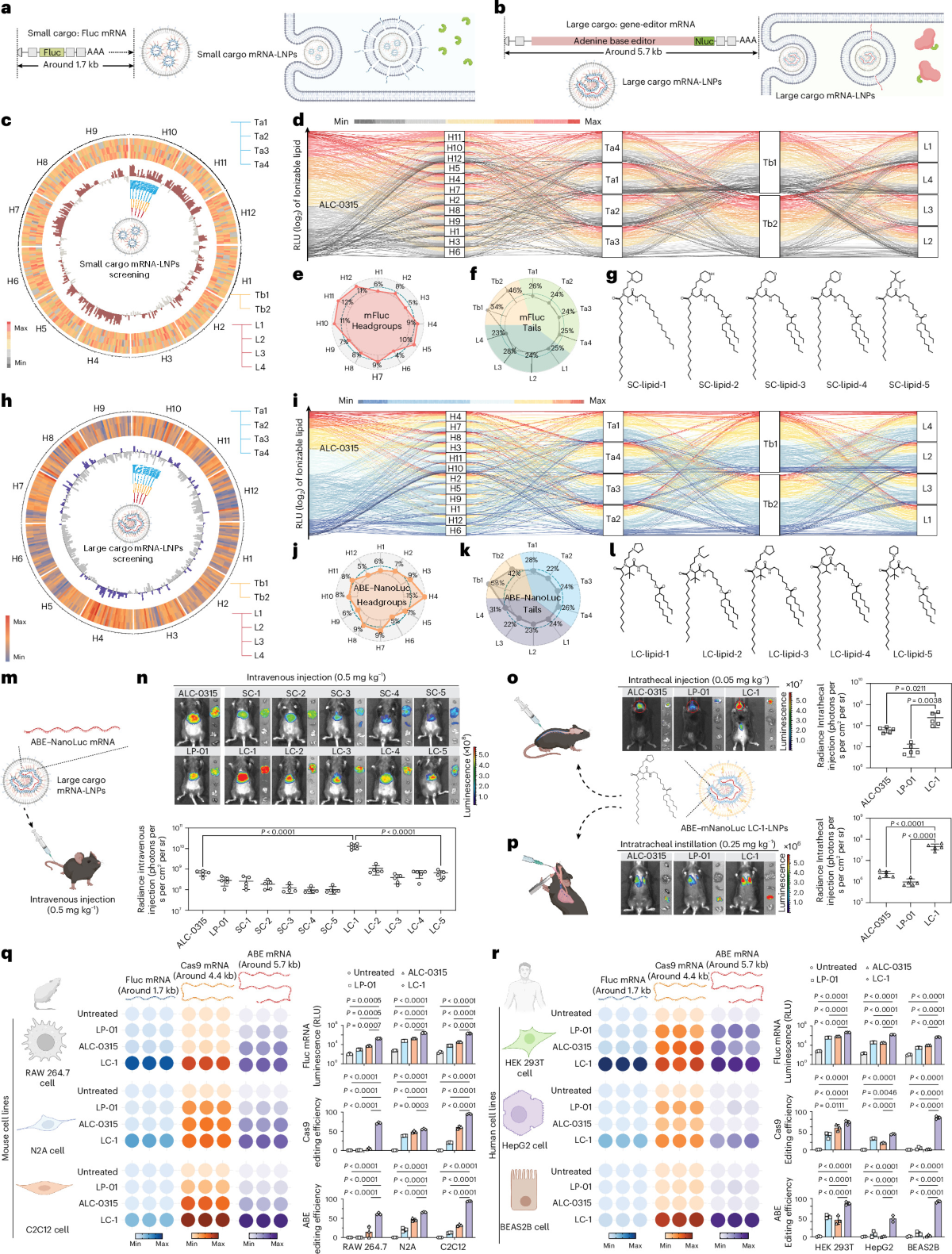
Researchers screened a library of 384 ionizable lipids against a 5.7-kb ABE-NanoLuc reporter mRNA and picked out a lead called LC-1, according to a paper in Nature Biotechnology. Across intravenous, intrathecal and intratracheal dosing, LC-1 reached up to 79% Cas9-mediated knockout in liver, 48% in brain and 27% in lung. That ran up to fourfold higher than LP-01 and ALC-0315. LC-1 also supported base editing of PCSK9, CFTR R55X and Ube3a-ATS. The benchmarks turned disordered as mRNA size grew. LC-1 held stronger lipid-RNA interactions, an ordered inverted-hexagonal structure and pH-responsive membrane disruption.
Lipid nanoparticles are clinically validated for RNA delivery. Potency often drops as the transcript gets longer. The authors say cargo size should be a key design parameter when screening ionizable lipids.
Written by the Genomes desk from the primary source cited and linked above and checked against it. Research use only; not medical advice. Corrections: [email protected].