
SPLENDID lifts polygenic risk accuracy by treating ancestry as a continuum, not a fixed label
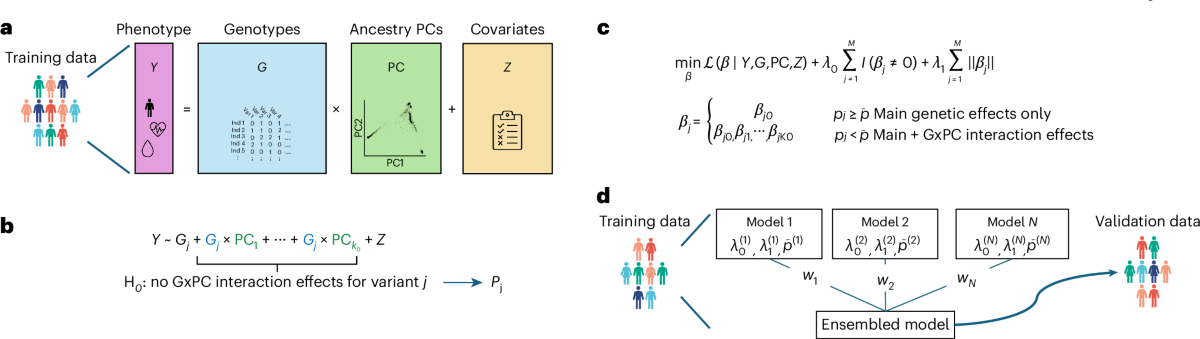
A penalized regression method called SPLENDID produced higher polygenic risk score accuracy than existing approaches by modelling genetic ancestry as a continuum rather than assigning individuals to pre-specified ancestry groups. In analyses covering 224,364 participants from the All of Us Research Program and 340,140 from UK Biobank, prediction accuracy improved most for non-European and admixed ancestries. The method builds a single prediction model and requires no ancestry labels at any stage, addressing a practical obstacle for clinical settings where decisions are not typically made on the basis of ancestry and many individuals do not fit neatly into a defined group. The findings were published in Nature Methods.
Polygenic risk scores guide disease risk stratification, but their accuracy falls in non-European and admixed populations. A label-free model that narrows that gap would give clinicians a more reliable tool in diverse patient populations. Clinical validation would still be required before deployment.
Written by the Genomes desk from the primary source cited and linked above and checked against it. Research use only; not medical advice. Corrections: [email protected].