
TenK10K linked rare genetic variants to immune cell gene activity
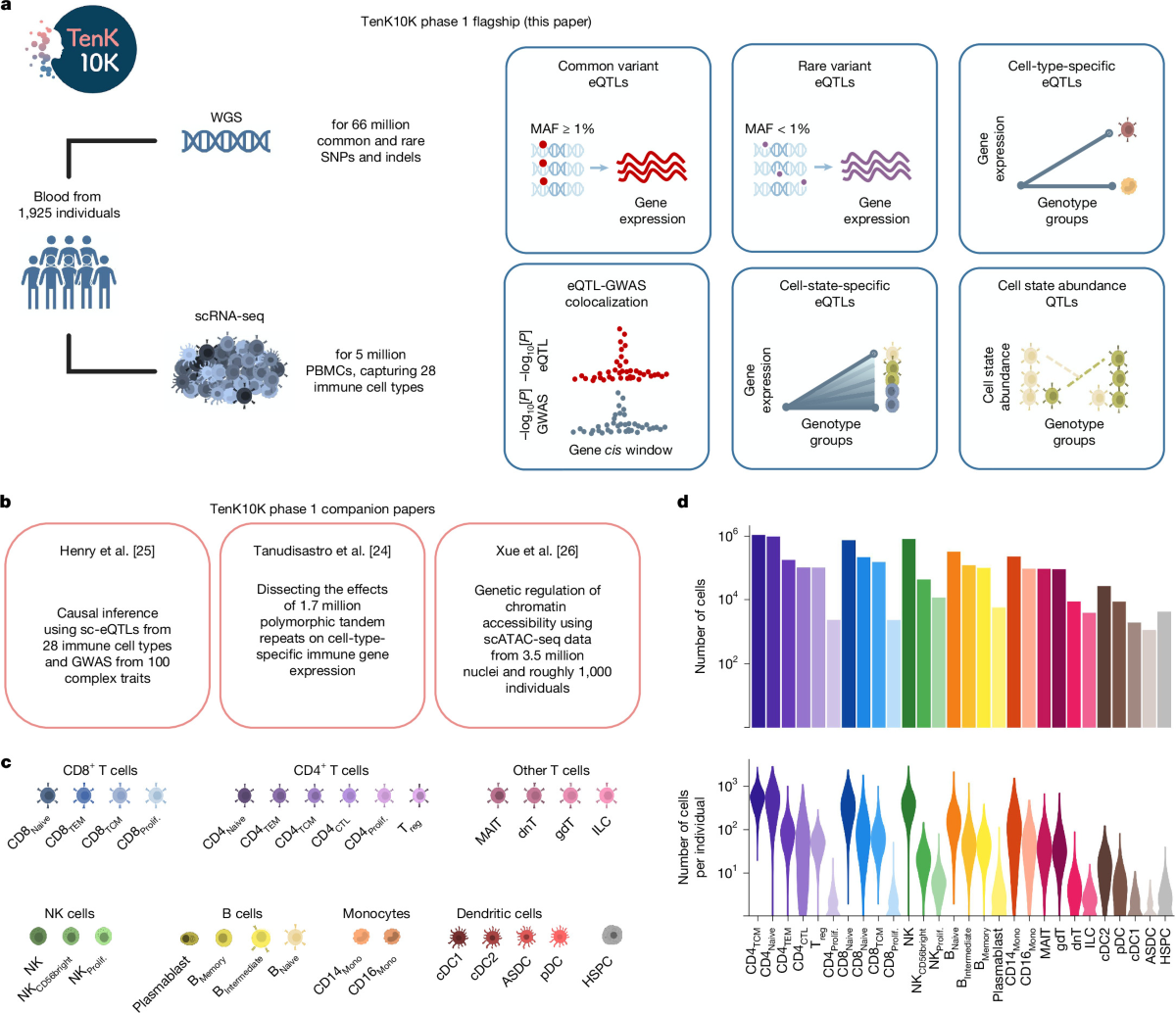
Rare genetic variants, analysed together, were associated with gene activity for 47% of 21,404 genes tested in phase 1 of TenK10K, a study in Nature reports. Researchers paired whole-genome sequencing with RNA measurements from 5,438,679 blood immune cells from 1,925 people of European ancestry. Across 28 immune cell types, they identified common genetic variants that may regulate 83% of tested genes. About half of the genetic effects were detected in only one or a few cell types.
Almost none of the effects were detected across all cell types. The analysis also found signals for nearly 5,000 genes, roughly 25%, with no previously reported association between genetic variation and gene activity in a large blood study.
The team measured RNA, the molecules produced when genes are active, in individual cells. Their statistical method, SAIGE-QTL, modelled those cells directly instead of pooling their measurements for each donor. This approach mapped more than 150,000 common-variant effects and more than 30,000 rare-variant effects on gene activity. Earlier studies had largely focused on common variants because they had smaller samples and relied on DNA testing arrays that do not accurately capture most rare variants.
To investigate possible disease mechanisms, the researchers compared their gene-activity associations with genetic associations for 60 disease phenotypes and blood traits. They looked for statistical evidence that the same underlying genetic variant accounted for both signals. The comparison yielded more than 60,000 such events involving more than 5,000 genes. These provided potential molecular mechanisms in almost 900 genes associated with variation in human traits.
The researchers also examined cell states: differences in activity related to cell function within immune cell populations. Using scDeepID, a deep learning method, they identified states along which gene activity varied. They mapped more than 15,000 genetic associations whose effects on gene activity changed along those states, and identified 164 independent genetic variants that regulated how abundant the cell states were.
The findings link disease-associated genetic variants to possible effects on gene activity in particular immune cells. They give researchers candidate molecular mechanisms to investigate, while extending the map of rare-variant effects that had largely been uncharacterized.
Written by the Genomes desk from the primary source cited and linked above and checked against it. Research use only; not medical advice. Corrections: [email protected].