
Wreath predicts tissue-specific effects of DNA variants on methylation
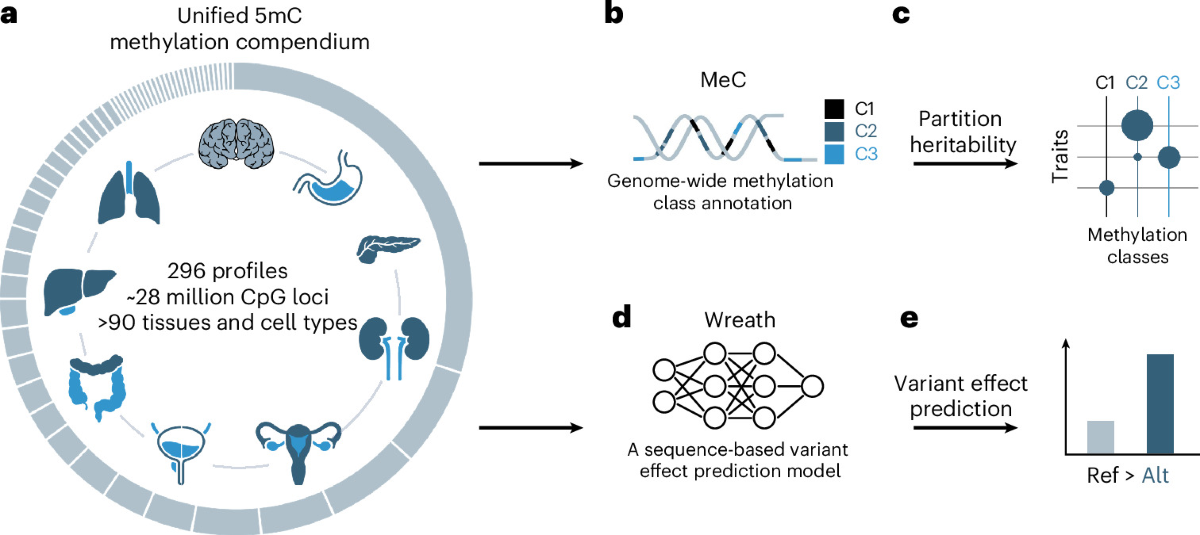
Researchers combined human DNA methylation data across over 90 tissues and cell types and developed Wreath, a model that predicts how genetic variants affect methylation in each setting. Methylation refers to chemical marks on DNA that help regulate genes and other cellular processes. Reporting in Nature Genetics, the team used the model to generate hypotheses about how individual disease-causing variants outside protein-coding regions might disrupt regulation. The model, unified data collection and classifications of methylation patterns are publicly available.
The collection contained 296 profiles covering approximately 28 million CpG sites, positions in DNA where a cytosine sits next to a guanine and can carry a methylation mark. To build it, the team processed 696 publicly available profiles from multiple studies that used whole-genome bisulfite sequencing. This method measures methylation at individual DNA bases across the genome.
The measurements had to be made comparable before they could be analysed together. The researchers used the hg38 human genome assembly as a common reference, matched measurements to shared CpG coordinates and combined methylation readings from the two DNA strands. They then merged replicate profiles to produce the unified collection.
Probe-based arrays, historically used to study methylation, captured roughly 3% of the approximately 28 million CpG sites. Those measurements were concentrated near the points where genes begin to be read and within genes. Whole-genome bisulfite sequencing already allowed researchers to measure methylation across the genome, but integrating results across tissues, cell types and conditions remained a challenge. According to the authors, no previous studies had harmonized and integrated these sequencing datasets. Earlier prediction models also covered less than 3% of CpG sites and few tissues or conditions.
Wreath predicts methylation from DNA sequence, taking account of the tissue or cell type involved. It uses deep learning, a form of computer modelling that learns patterns from data. The researchers designed it to predict methylation levels at all CpG sites in the human genome, including changes associated with genetic variants. They applied it to disease-causing variants outside protein-coding regions to examine their effects on tissue-specific methylation.
To classify methylation patterns, the researchers divided the genome into 100-base pair sections and grouped sections with similar patterns across tissues and cell types. They identified 43 clusters. Of these, 20 had consistently high methylation across tissues and were enriched for repeated DNA sequences and histone marks associated with repression, chemical modifications to proteins around which DNA is packaged.
The team focused its analysis on the remaining 23 clusters, which it called methylation classes. These included patterns specific to particular tissues and patterns shared across them. Some were associated with promoters, regions where gene reading begins, or other regions that regulate gene activity. The classes were also enriched for sites where proteins involved in gene regulation bind to DNA.
The collection puts previously separate sequencing datasets into a uniform format for whole-genome methylation analysis. Researchers can use its methylation classes alongside Wreath to investigate how disease-associated changes outside protein-coding regions may affect gene regulation.
Written by the Genomes desk from the primary source cited and linked above and checked against it. Research use only; not medical advice. Corrections: [email protected].