
X-BCRdb links B-cell receptors with gene activity across 61 studies
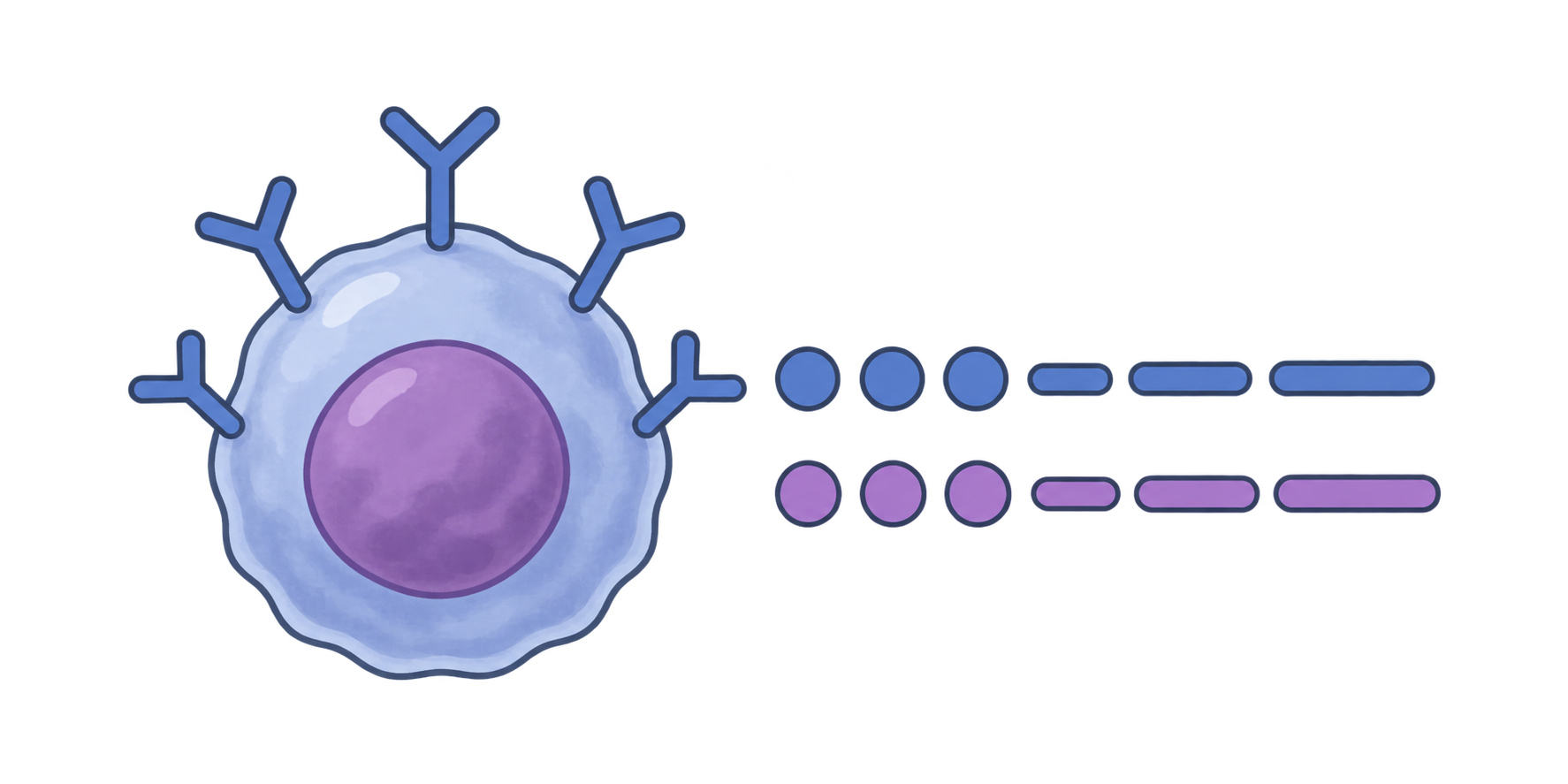
X-BCRdb brings together 2 402 995 B-lineage cells, including 1 565 870 with matched gene-activity and B-cell receptor information. The database combines 61 studies, 1401 samples and 903 subjects across 45 disease or physiological categories and 13 tissue groups. Researchers affiliated with Shanghai Jiao Tong University School of Medicine and Fudan University describe the resource in Nucleic Acids Res. Its current release contains 3 993 244 annotated B-cell receptor records.
B cells and their receptors form the basis of the immune system's antibody response. X-BCRdb combines single-cell RNA sequencing, which measures gene activity in individual cells, with V(D)J profiling, which examines the rearranged genetic segments that encode their receptors. Together, these methods connect a cell's receptor sequence to its pattern of gene activity.
The authors said existing immune-receptor resources often focused on T cells and their receptors or offered limited analysis specific to B-cell receptors. X-BCRdb applies a common analytical workflow to data from the collected studies, standardizing how B cells are identified and their receptor sequences described.
The workflow assigns cells to clonotypes, groups defined by their receptor sequences, and reconstructs relationships within those groups to examine their evolution. It also supports public clonotype analysis, examining clonotypes shared between subjects. Other analyses cover somatic hypermutations, changes acquired in receptor genes as B cells mature, and antibody types. Researchers can also examine how the receptor's heavy and light chains pair.
Through the web interface, researchers can examine receptor features alongside gene activity within individual samples or across studies and diseases. A search tool looks for similarities across the collection in CDR3, a variable region of the receptor sequence. X-BCRdb is freely available at https://xbcrdb.net/, with data downloads and an application programming interface, or API, that lets software retrieve data directly.
The authors describe X-BCRdb as a resource for studying disease-associated B-lineage-cell responses and prioritizing candidate B-cell receptor sequences for antibody discovery. Those candidates are intended for subsequent laboratory testing of their function.
Written by the Genomes desk from the primary source cited and linked above and checked against it. Research use only; not medical advice. Corrections: [email protected].