
Stem cell study links genetic variants to microglial behaviour and neurodegenerative disease risk
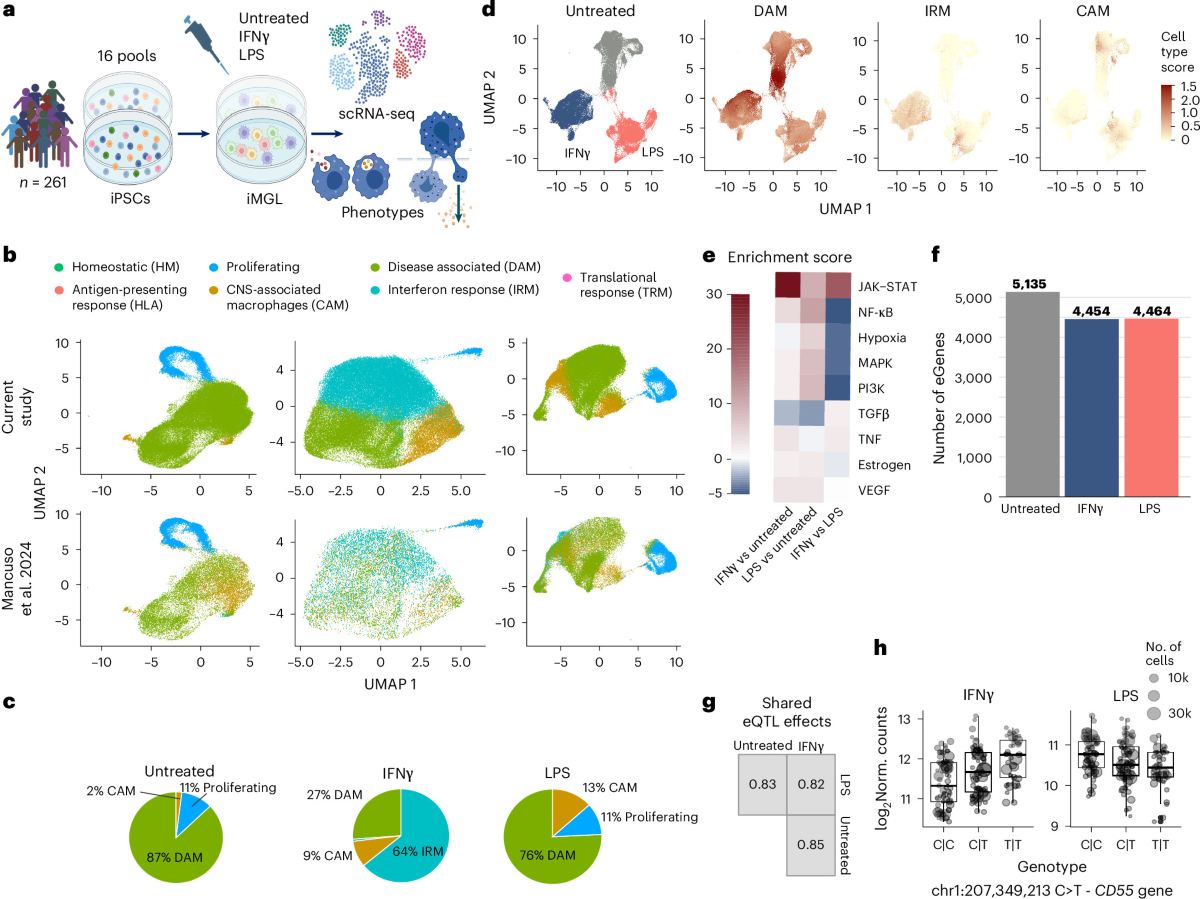
Experiments with microglia-like cells grown from 261 human stem cell lines identified 36 genes linked to cell development, movement and the engulfing of material. The Nature Genetics study also identified 7,121 genes whose activity was associated with genetic variants, and 79 shared genetic signals across gene activity analyses and four studies of neurodegenerative disease risk. Combined analyses implicated disease-relevant variants involving LRRK2 and TREM2 in phagocytosis, the process by which cells engulf material.
Microglia help clear abnormal proteins and are involved in inflammation in the brain. Human microglia are difficult to obtain, limiting research into how disease-associated DNA differences affect their behaviour. The researchers used induced pluripotent stem cells, which can develop into other cell types, to grow living microglia-like cells under controlled laboratory conditions.
They grew 261 lines in 16 pools, each containing 16 to 72 lines. Approximately two million cells remained after quality checks. Some cells were left untreated; others were exposed to either of two substances that mimic inflammatory immune responses. Measurements of individual cells tracked gene activity. Separate experiments measured how the stem cells developed into microglia-like cells, how they moved and their ability to engulf material.
The cells did not represent all microglial subtypes alike. Among untreated cells, 87% resembled disease-associated microglia. Comparison with a previously published reference dataset mapped the cells to disease-associated microglia and central nervous system-associated macrophages, except after interferon-γ treatment, when they predominantly expressed markers of an interferon response.
Pooling cells from different donors let the researchers connect naturally occurring DNA differences with gene activity and cell behaviour. An analysis that grouped rare, damaging genetic variants by gene identified the 36 genes influencing development into microglia-like cells, engulfing material and movement. The researchers also compared genetic signals associated with gene activity against those associated with neurodegenerative disease risk, looking for signals shared between them.
Combining those results with measurements of cell behaviour implicated disease-relevant variants involving LRRK2 and TREM2 in engulfing material. A CRISPR screen, which alters genes to test their effects on cells, independently identified a role for TREM2 in that process.
Donors differed in how well their cells developed or multiplied, leaving them unevenly represented in the pools. The researchers obtained enough cells for the gene activity analyses from 194 donors, using a threshold of more than 100 cells. Fewer lines reached the 100-cell cutoff in larger pools, so the team focused on pools of 16 to 20. Cluster composition and gene activity were highly comparable between pools regardless of donor numbers. The researchers combined the pools using donors shared across all pools.
Most disease-associated genetic variants do not code for proteins and probably act by regulating gene activity. Measuring both gene activity and cell behaviour in living microglia-like cells gives researchers a way to investigate the cellular effects of those variants, including under different inflammatory conditions.
Written by the Genomes desk from the primary source cited and linked above and checked against it. Research use only; not medical advice. Corrections: [email protected].