
Blocking interferon-gamma halted disease progression in FSHD models
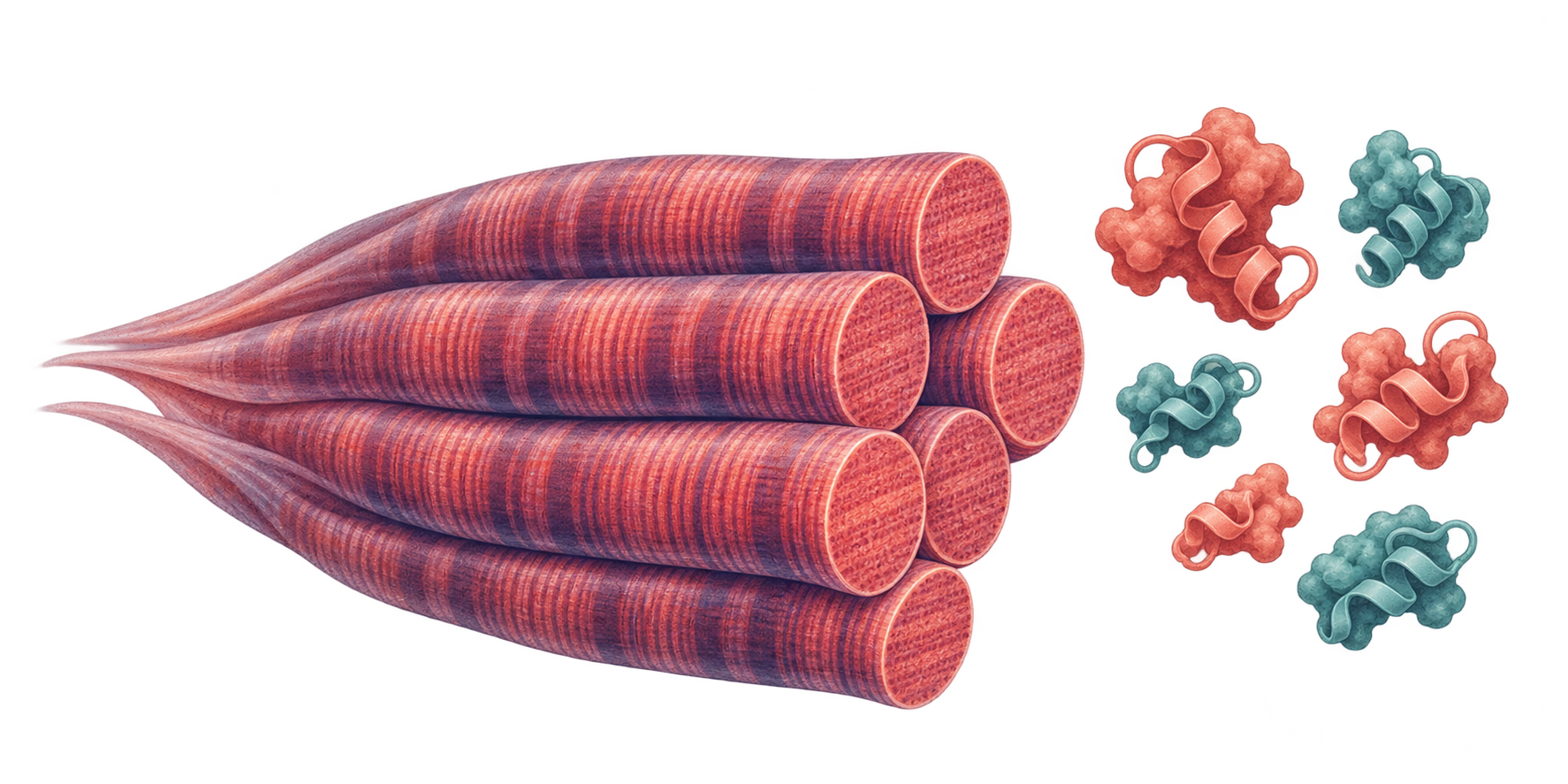
Blocking the immune signal interferon-gamma reduced muscle inflammation and halted disease progression in models of facioscapulohumeral muscular dystrophy (FSHD). The experiments linked the signal to DUX4, a protein that controls gene activity and is abnormally active in FSHD skeletal muscle. Giving interferon-gamma alone reproduced key harmful effects of DUX4. The study appeared online in Science Advances on November 18, 2026.
DUX4 normally acts during early embryonic development. Its reactivation in FSHD skeletal muscle triggers lasting inflammation and progressive muscle degeneration. The molecular links between DUX4 and the immune response that persists in the disease have remained poorly understood.
The researchers found that DUX4 set off a process resembling the body's response to a virus, but without the usual activation of type I interferons. These are immune signals involved in that response. Instead, a different signal, interferon-gamma, dominated the immune activity. The team described this process as “skewed viral mimicry”, offering an explanation for why inflammation does not resolve in FSHD.
The experiments tested both sides of that link. Interferon-gamma alone reproduced key disease-related effects of DUX4, while blocking it reduced muscle inflammation and stopped progression in the models. The abstract does not specify what kinds of models were used or report treatment of patients.
The research involved authors at IRCCS Ospedale San Raffaele in Milan, the University of Pisa and the University of Pavia, as well as IRCCS Mondino Foundation and Koç University in Istanbul.
Biferali and Gabellini disclosed that they had filed a patent concerning the findings, WO/2025/257347, for interferon-gamma pathway inhibitors for treating FSHD. The other authors declared no competing interests.
The work gives researchers a specific immune pathway to target in FSHD, connecting the abnormal activity of a gene-controlling protein in muscle to inflammation that does not subside.
Written by the Genomes desk from the primary source cited and linked above and checked against it. Research use only; not medical advice. Corrections: [email protected].